Launch offer — valid today only

The Easiest Way to Prep for Your Food Protection Manager Exam With Every Rule Drawn Step by Step!

The danger zone, two-stage cooling, cooking temperatures, the walk-in shelf order, exclude or restrict, the three-compartment sink and the 7 HACCP principles: in your course notes it's a wall of text. Here each topic fits on one page, with the drawing and what you need to remember. 65 illustrated pages.

I WANT TO STUDY IT WITH DRAWINGS

🔒 Secure checkout · PDF by email · 30-day guarantee

One topic per pagethe drawing shows you the rule and the text backs it up
65 illustrated pages11 parts, from the manager exam to exam day
Up-to-date sourcesCurrent FDA Food Code, accredited exam outlines and state health department guidance

This Is What the Pages You Will Study Look Like

One topic per page, the drawing that shows you how it's done and the boxes with what you need to know:

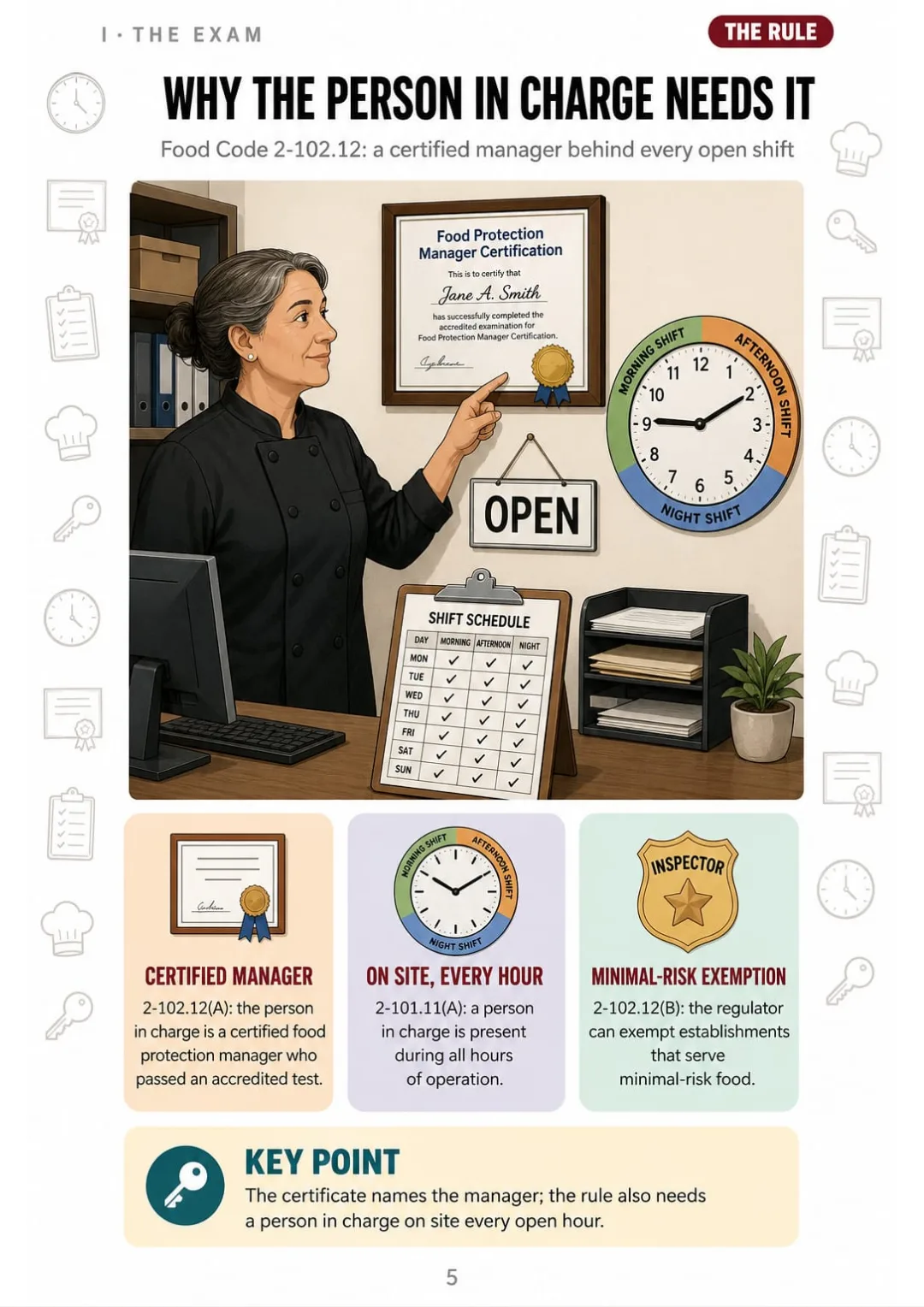
Food Code 2-102.12(A) and 2-101.11(A): certified manager, person in charge on site all hours.
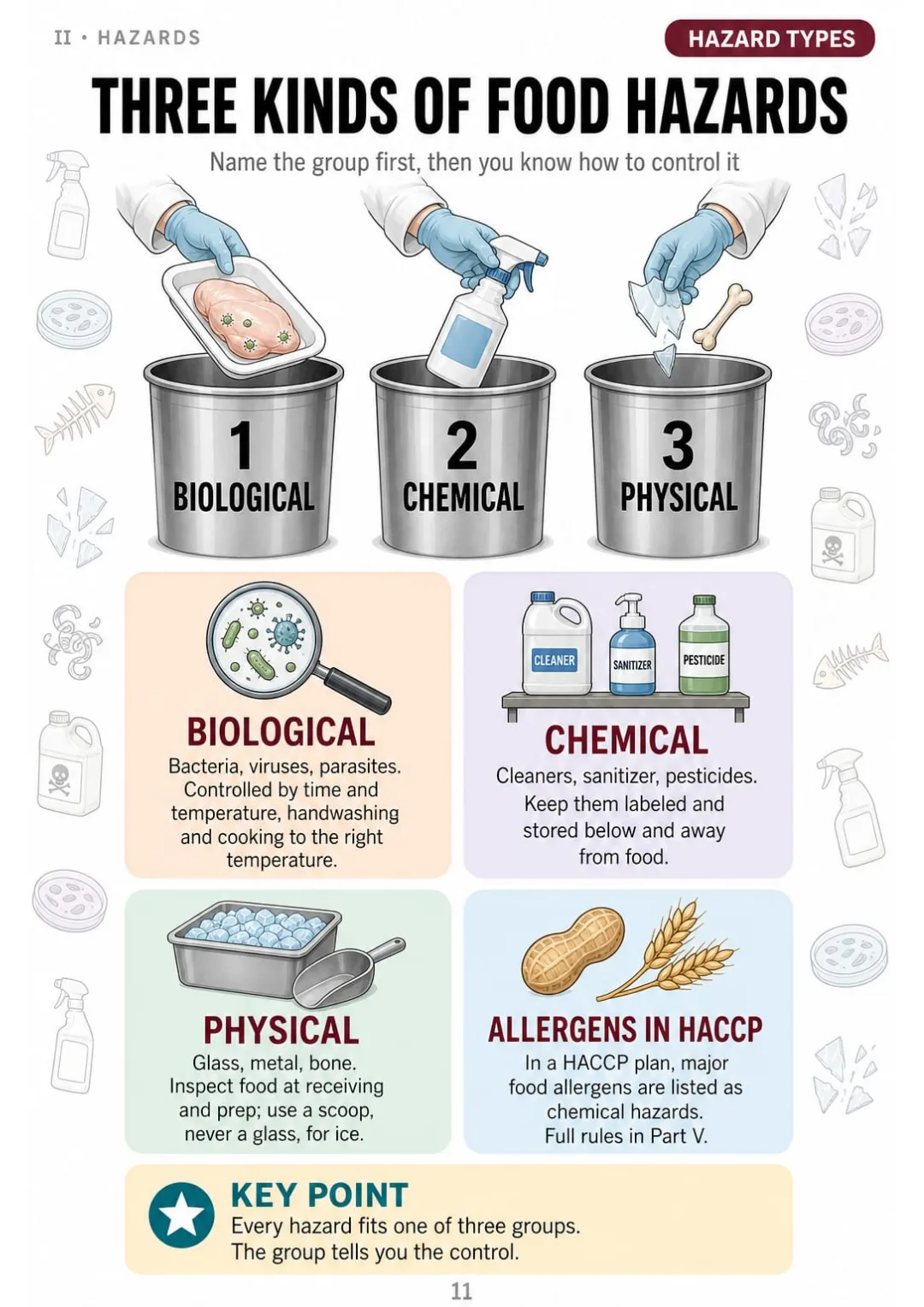
Biological, chemical, physical: three bins, one kitchen example each
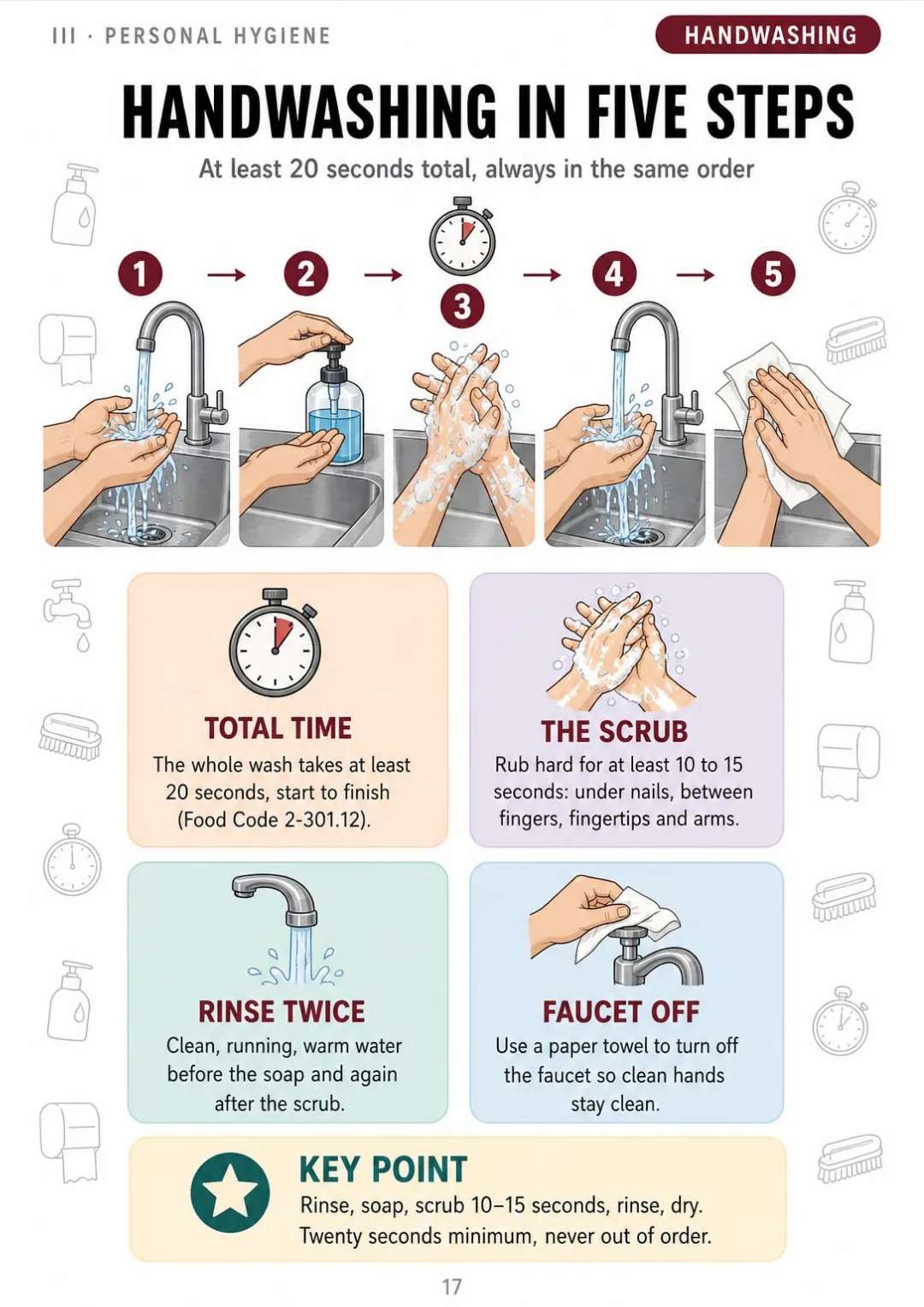
Handwashing: rinse, soap, scrub 10–15 s, rinse, dry — at least 20 seconds (2-301.12).
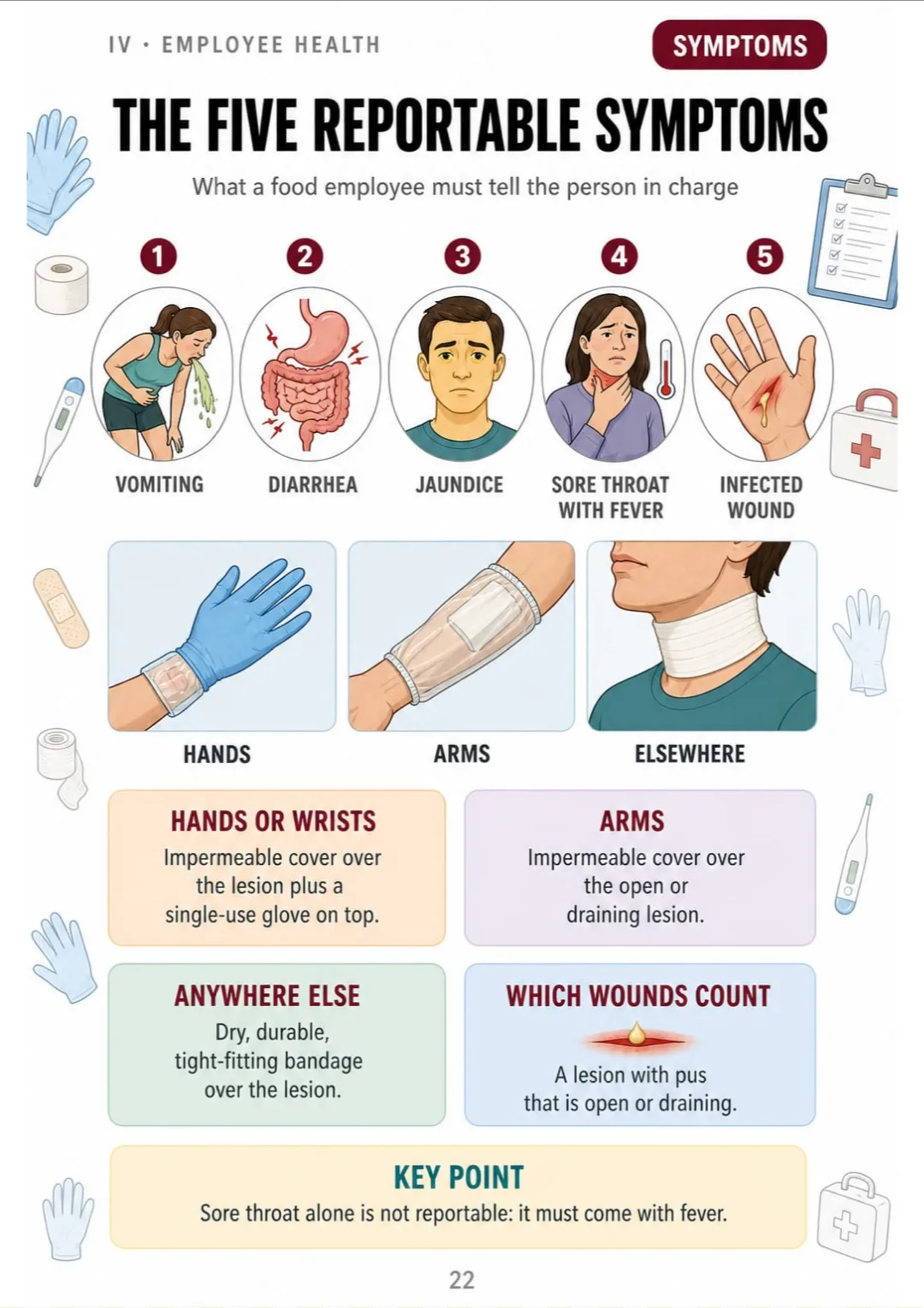
Vomiting, diarrhea, jaundice, sore throat with fever, infected lesion: plus the three cover rules.
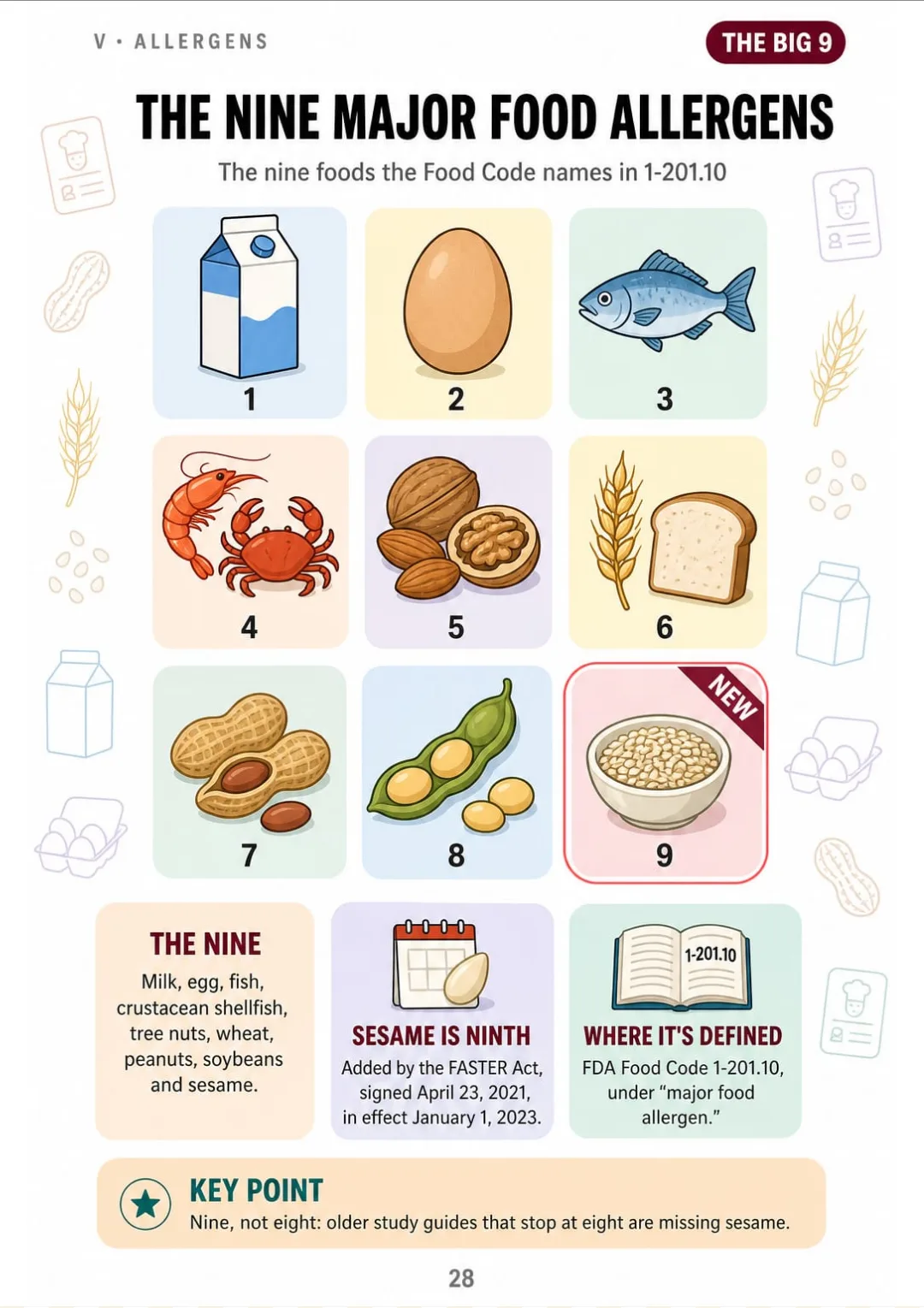
Milk, egg, fish, shellfish, tree nuts, wheat, peanuts, soy and sesame: the Big 9.
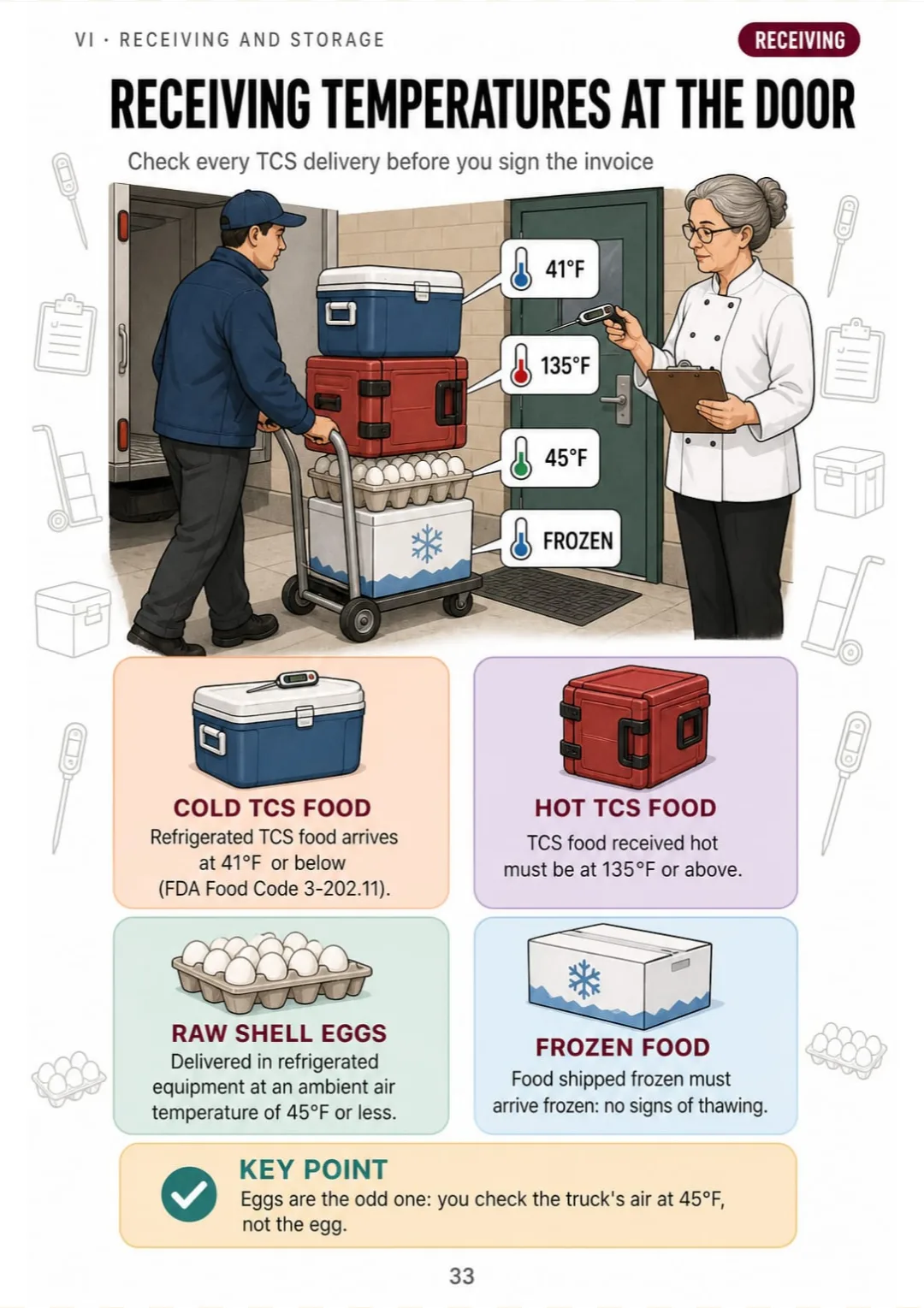
Receiving: cold TCS 41°F or below, hot 135°F or above, shell eggs 45°F air, frozen arrives frozen.
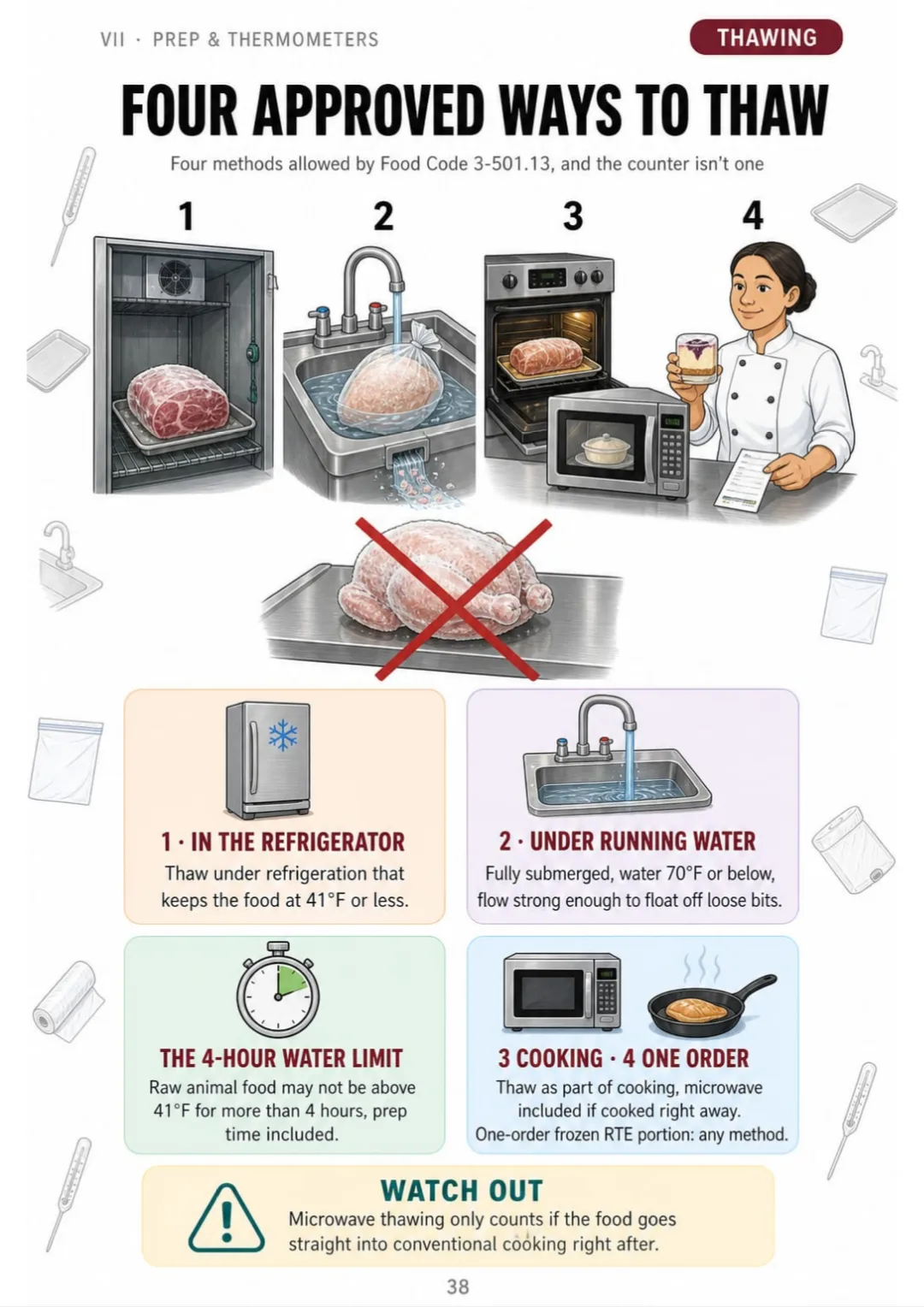
Fridge at 41°F, running water at 70°F, during cooking, or one-order portion: Food Code 3-501.13
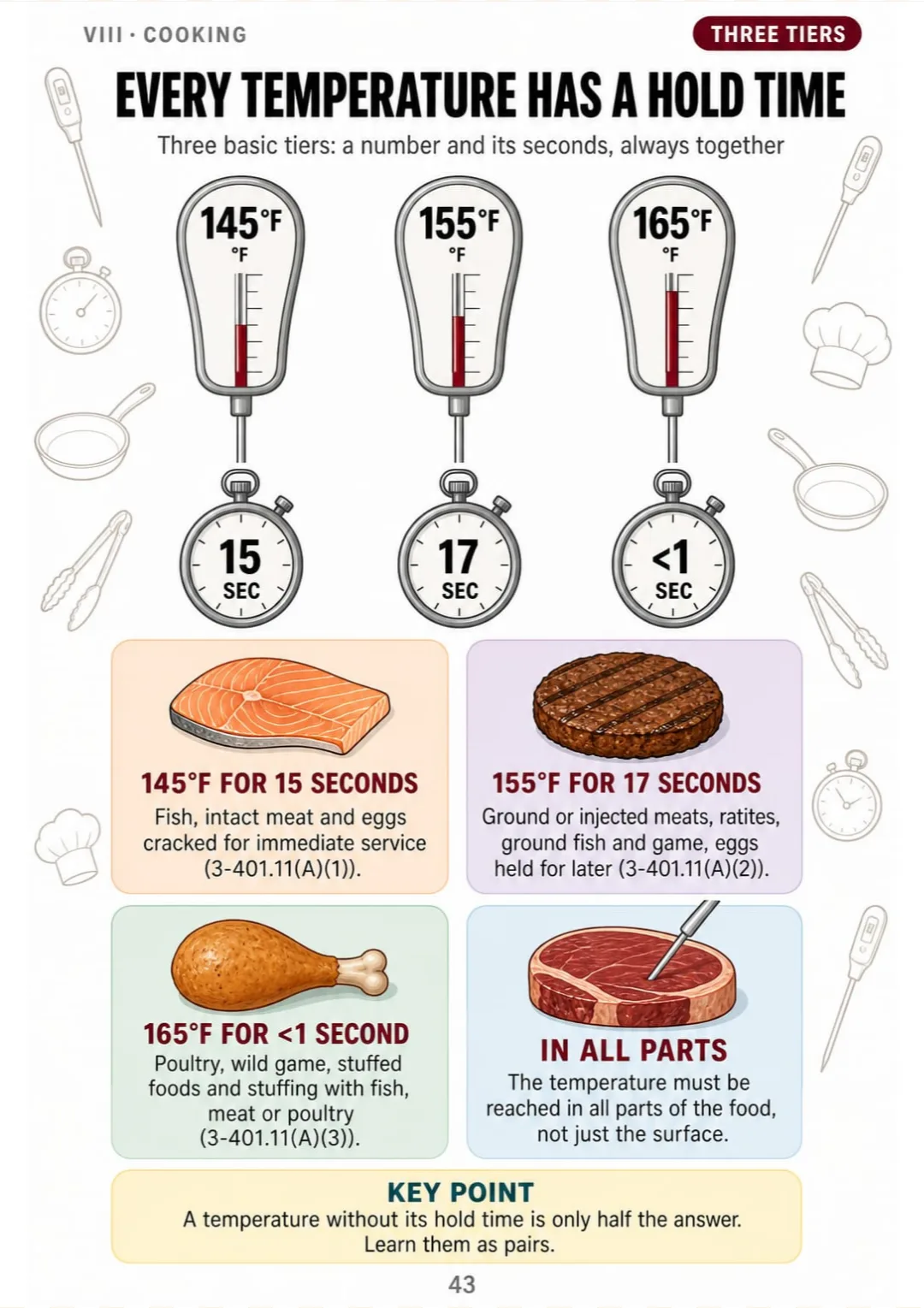
145°F/15 s · 155°F/17 s · 165°F/<1 s, in all parts of the food (3-401.11)

Swipe to see more →

These are real pages from the book. The table of contents is the full one: 11 parts and 61 topics.

Nobody Ever Put It in Order.

You've read the employee illness section three times. You close the manual...

...and you still hesitate: a cook with a sore throat and a fever, exclude or restrict? It was just one line after another.

Handwashing: rinse, soap, scrub 10–15 s, rinse, dry — at least 20 seconds (2-301.12).

Here it's a drawn decision chart: the symptom on one side, exclude or restrict on the other, with its own column for highly susceptible populations like day care and senior care.

And on the pages next to it, every rule gets its own: the five symptoms, the six pathogens to report, jaundice, exposure windows and the written illness policy.

First you understand why it's done that way. Then the order sticks on its own.

SEE THE DIFFERENCE

Stop Memorizing Rules You Can't Picture:

THIS
  • Pages and pages of cramped text
  • Rules without a single drawing
  • At the test center, you don't know where to start
Food safety hazards are generally classified into three categories according to their nature and origin. Biological hazards include pathogenic microorganisms such as bacteria, viruses and parasites, as well as certain toxins produced by them, and represent the principal cause of foodborne illness. Chemical hazards comprise cleaning agents, sanitizers, pesticides, improperly used additives and toxic metals that may leach from unsuitable equipment. Physical hazards consist of foreign objects, including glass, metal fragments, bone and jewelry, which may be introduced at any point in the flow of food.
FOR THIS
  • Every rule drawn
  • One topic per page, with the rules in boxes
  • You remember it because you've seen it
Biological, chemical, physical: three bins, one kitchen example each
CONTENTS

Take a Look at the 11 Parts and 61 Topics

The manager exam, hazards, personal hygiene, employee health, allergens, receiving and storage, prep and thermometers, cooking, holding and cooling, cleaning and sanitizing, and managing safety: 65 pages, all drawn

IThe Food Manager Exam · pp. 5-10
  1. Why the Person in Charge Needs a Certificate
  2. Accredited Exams and Who Offers Them
  3. Questions, Time Limit and Pass Mark
  4. The Seven Content Areas and Their Weight
  5. Retakes, Five-Year Renewal and Local Rules
  6. Manager Certificate vs Food Handler Card
IIHazards and Foodborne Illness · pp. 11-16
  1. Biological, Chemical and Physical Hazards
  2. The Six Pathogens Managers Must Report
  3. TCS Food and Ready-to-Eat Food
  4. The Temperature Danger Zone
  5. Highly Susceptible Populations
  6. Freezing Fish to Destroy Parasites
IIIPersonal Hygiene · pp. 17-21
  1. Handwashing Step by Step
  2. When Hands Must Be Washed
  3. No Bare Hands on Ready-to-Eat Food
  4. Single-Use Gloves, One Task Each
  5. Jewelry, Hair Restraints and Clean Clothes
IVEmployee Health: Exclude or Restrict · pp. 22-27
  1. The Five Reportable Symptoms
  2. The Six Reportable Diagnoses
  3. Exclude vs Restrict: The Decision
  4. Jaundice, Hepatitis A and Typhoid Fever
  5. Exposure Windows After an Outbreak
  6. The Written Employee Illness Policy
VAllergens · pp. 28-32
  1. The Nine Major Food Allergens
  2. Cross-Contact vs Cross-Contamination
  3. Separate Boards and Clean Tools
  4. What the Allergen Definition Leaves Out
  5. The Manager's Allergen Knowledge
VIReceiving and Storage · pp. 33-37
  1. Receiving Temperatures at the Back Door
  2. Shellfish Tags and the 90-Day Rule
  3. Walk-In Shelf Order, Top to Bottom
  4. Separating Raw Animal Foods by Type
  5. Date Marking and Combined Foods
VIIPreparation and Thermometers · pp. 38-42
  1. Four Approved Ways to Thaw
  2. Cleaning Surfaces Between Tasks
  3. The Four-Hour Cleaning Rule
  4. Thermometer Accuracy and Thin-Probe Use
  5. Calibrating in an Ice-Water Cup
VIIICooking · pp. 43-48
  1. Every Cooking Temperature Has a Hold Time
  2. Fish, Whole Cuts and Eggs for Service Now
  3. Ground Meat and Eggs Held for Later
  4. Poultry, Stuffing and Stuffed Foods
  5. Whole Roasts: The Time and Temperature Table
  6. Microwave Cooking: Cover, Rotate, Stand
IXHolding, Cooling and Reheating · pp. 49-53
  1. Hot Holding, Cold Holding and Plant Foods
  2. Two-Stage Cooling on the Clock
  3. Cooling Methods That Work
  4. Reheating for Hot Holding
  5. Time as a Public Health Control
XCleaning, Sanitizing and Facilities · pp. 54-59
  1. Cleaning Is Not Sanitizing
  2. The Three-Compartment Sink
  3. Chlorine, Iodine and Quat Rules
  4. Hot-Water Sanitizing by Hand and Machine
  5. Air-Dry, Never Towel-Dry
  6. Handwashing Sinks, Air Gaps and Pests
XIManaging Safety, Inspection and Exam Day · pp. 60-65
  1. Active Managerial Control in Practice
  2. The Seven HACCP Principles in Order
  3. When a Variance or HACCP Plan Is Needed
  4. Priority, Priority Foundation and Core Items
  5. What Happens During an Inspection
  6. Look-Alike Terms and Exam Day

What If Every Topic Fit on a Single Page?

Picture this:

Instead of rereading half a page on two-stage cooling without being able to see it...

...you open the page and find the clock with both stages drawn: 135°F down to 70°F within 2 hours, then down to 41°F, 6 hours in total.

Milk, egg, fish, shellfish, tree nuts, wheat, peanuts, soy and sesame: the Big 9.

And the danger zone, cooking temperatures, the walk-in shelf order, exclude or restrict and the 7 HACCP principles turn into drawings and tables you can read at a glance.

You stop repeating and start understanding.

That's exactly what The Food Manager Sketchbook does. It's not “just another manual.” It's 65 drawn pages: 11 parts and 61 topics, with the look-alike terms side by side at the end. Because what you see in order, you remember.

Because what your brain sees organized, it remembers.

Here Is What You Get with The Food Manager Sketchbook:

Ipp. 5-10

The Food Manager Exam

Why the person in charge needs a certificate, the accredited exams, questions and time limit, the seven content areas, renewal and local rules, and manager certificate vs. food handler card.

IIpp. 11-16

Hazards and Foodborne Illness

Biological, chemical and physical hazards, the six pathogens managers must report, TCS and ready-to-eat food, the danger zone, highly susceptible populations and freezing fish for parasites.

IIIpp. 17-21

Personal Hygiene

Handwashing step by step, when hands must be washed, no bare hands on ready-to-eat food, one glove per task, jewelry, hair restraints and clean clothes.

IVpp. 22-27

Employee Health: Exclude or Restrict

The five symptoms and six diagnoses to report, exclude vs. restrict, jaundice, hepatitis A and typhoid fever, exposure windows and the written illness policy.

Vpp. 28-32

Allergens

The nine major allergens, cross-contact vs. cross-contamination, separate boards and clean tools, what the definition leaves out and what the manager must know.

VIpp. 33-37

Receiving and Storage

Receiving temperatures at the back door, shellfish tags and the 90-day rule, the walk-in shelf order top to bottom, separating raw animal foods and date marking.

VIIpp. 38-42

Preparation and Thermometers

The four approved ways to thaw, cleaning surfaces between tasks, the four-hour rule, thermometer accuracy and calibrating in ice water.

VIIIpp. 43-48

Cooking

Every cooking temperature with its hold time: fish and whole cuts, ground meat, eggs, poultry and stuffed foods, the whole-roast table and microwave cooking.

IXpp. 49-53

Holding, Cooling and Reheating

Hot and cold holding, two-stage cooling on the clock, cooling methods that work, reheating for hot holding and time as a public health control.

Xpp. 54-59

Cleaning, Sanitizing and Facilities

Cleaning vs. sanitizing, the three-compartment sink, chlorine, iodine and quat rules, hot-water sanitizing, air-drying, handwashing sinks, air gaps and pests.

XIpp. 60-65

Managing Safety, Inspection and Exam Day

Active managerial control, the 7 HACCP principles in order, variances, priority and core items, what happens during an inspection, look-alike terms and exam day.
And That Is Not All: 2 More Books, Free

The Danger Zone and Cooling Card

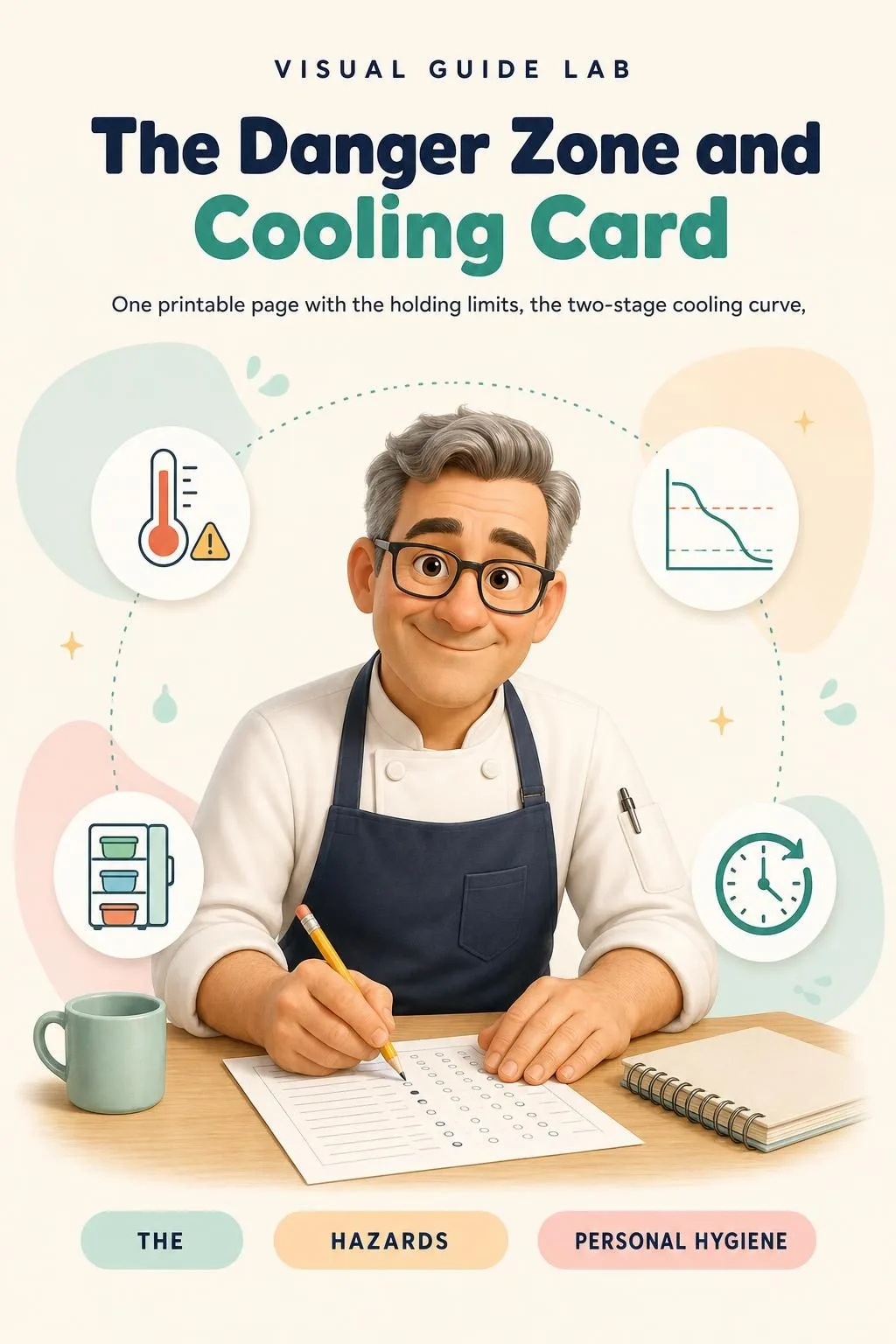
BONUS 1: «The Danger Zone and Cooling Card»

Value on its own: US$ 17.90

One printable page with the holding limits, the two-stage cooling curve, reheating and the walk-in shelf order, every number from the 2026 FDA Food Code, so you can review it at a glance or pin it in the kitchen.

250 Food Manager Terms on Cards

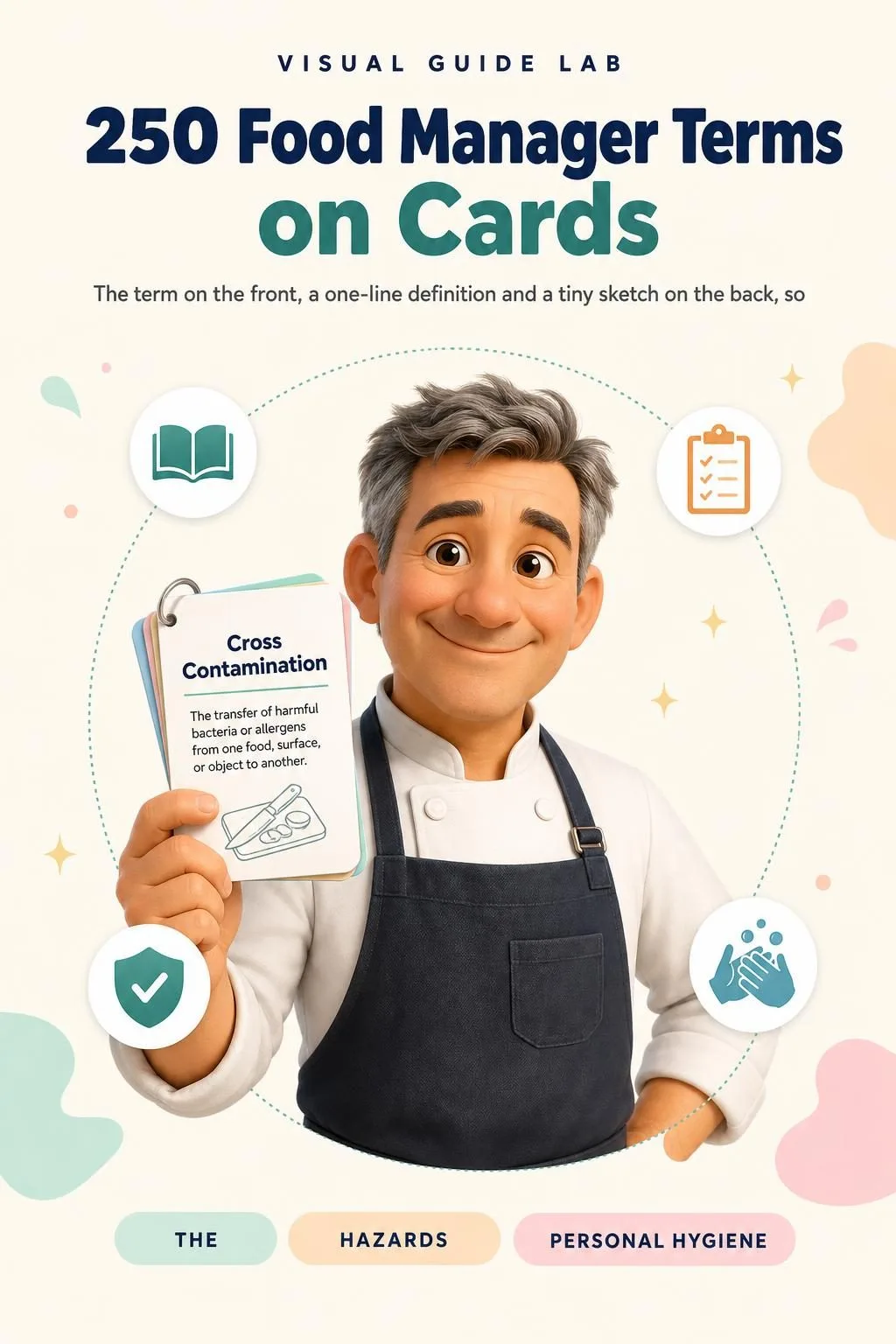
BONUS 2: «250 Food Manager Terms on Cards»

Value on its own: US$ 14.90

The term on the front, a one-line definition and a tiny sketch on the back, so you can quiz yourself in short sessions between shifts and catch the words you still mix up.

The Food Manager Sketchbook + 2 Free Books

  • The Food Manager Sketchbook: 65 illustrated pagesUS$ 87
  • BONUS 1: The Danger Zone and Cooling CardUS$ 17.90
  • BONUS 2: 250 Food Manager Terms on CardsUS$ 14.90
  • High-resolution PDF to printIncluded
Total value US$ 119.80
YOUR PRICE:
US$ 37
You save US$ 82.80
YES, I WANT THE FOOD MANAGER SKETCHBOOK FOR US$ 37

📄 This is a digital PDF book sent to your email: nothing is printed or shipped.

Secure purchaseEncrypted payment30-day guarantee

PDF by email: The Food Manager Sketchbook reaches your inbox as a PDF, and the two free books come by email too. One-time payment, no installments or hidden costs.

Is This Book for You?

You're Studying for the Manager Exam

You're Studying for the Manager Exam

Every rule in the flow of food, one topic per page, to review at night after service in short sessions.

Your Exam Date Is Close

Your Exam Date Is Close

The numbers that blur, each with its own drawing: holding, two-stage cooling, cooking temperatures with their hold times, and the look-alike terms side by side.

Your Certificate Is Up for Renewal

Your Certificate Is Up for Renewal

A quick drawn refresher of what you do every day, checked against the current FDA Food Code, plus a card to pin up in the kitchen.

To Sum Up: Here Is What You Get

US$ 119.80US$ 37
YES, I WANT THE FOOD MANAGER SKETCHBOOK FOR US$ 37

📄 This is a digital PDF book sent to your email: nothing is printed or shipped.

30DAYS
GUARANTEE

30-Day Guarantee

30-day guarantee: tell us what didn't work and we'll refund 100%.

You have 30 days to try The Food Manager Sketchbook and the two bonus books. If it doesn't work for you, tell us what didn't work and we'll refund 100% of what you paid. One-time payment, no subscriptions and no surprises.

Frequently Asked Questions

How do I get the material?

You get The Food Manager Sketchbook as a high-resolution PDF by email, to read on your phone or print. The two bonus books, The Danger Zone and Cooling Card and 250 Food Manager Terms on Cards, also come as PDFs by email.

Is it a monthly or a one-time payment?

One-time payment. No installments and no subscription.

Who is it for?

For anyone preparing for an ANAB-accredited food protection manager exam, such as ServSafe Manager or the NRFSP Food Safety Manager exam: owners, chefs, kitchen managers, food truck and catering operators, school and senior care kitchens, and managers renewing their certificate. You don't need to start from scratch or be an expert: each rule is explained from the start, with the exact numbers from the Food Code. Check the index above to see the topics.

What sources is it based on?

On the current FDA Food Code, checked against the ServSafe Food Protection Manager and NRFSP Food Safety Manager exam outlines and state health department guidance. Your state or county may use an earlier edition or add its own rules, so the book reminds you to check with your local health department.

Is it official material?

No. It's an independent study guide, not published, endorsed or accredited by the FDA, ANAB, the National Restaurant Association or NRFSP. ServSafe is a trademark of the National Restaurant Association and is named here only to describe which exams the guide helps you prep for.

Does it replace my course or give me the certificate?

No. It doesn't give you a certificate and doesn't replace the proctored exam, an accredited course or your health department's rules. It's the drawn review you keep beside your course.

Are the practice questions the real exam questions?

No. This book and its bonuses don't contain real exam questions. Any exam-style questions we offer, like the ones in the optional practice books, are written for these books and aren't official questions from any exam.

Can I print it?

Yes. It's a high-resolution PDF: print the whole book or just the pages you want to keep in the kitchen, like the cooling card.

What if I don't like it?

You're covered by a 30-day guarantee: tell us what didn't work and we'll refund 100%.

One Last Thing Before You Decide...

You don't have to reread the same page hoping it sticks this time.

You don't have to memorize temperatures and times you can't picture.

And you definitely don't have to walk into the test center without knowing where to start.

There's a simpler way. And it's one click away. Now it's your turn.

One-time payment: US$ 37 · Guarantee: 30 days · PDF by email

YES, I WANT THE FOOD MANAGER SKETCHBOOK FOR US$ 37

📄 This is a digital PDF book sent to your email: nothing is printed or shipped.